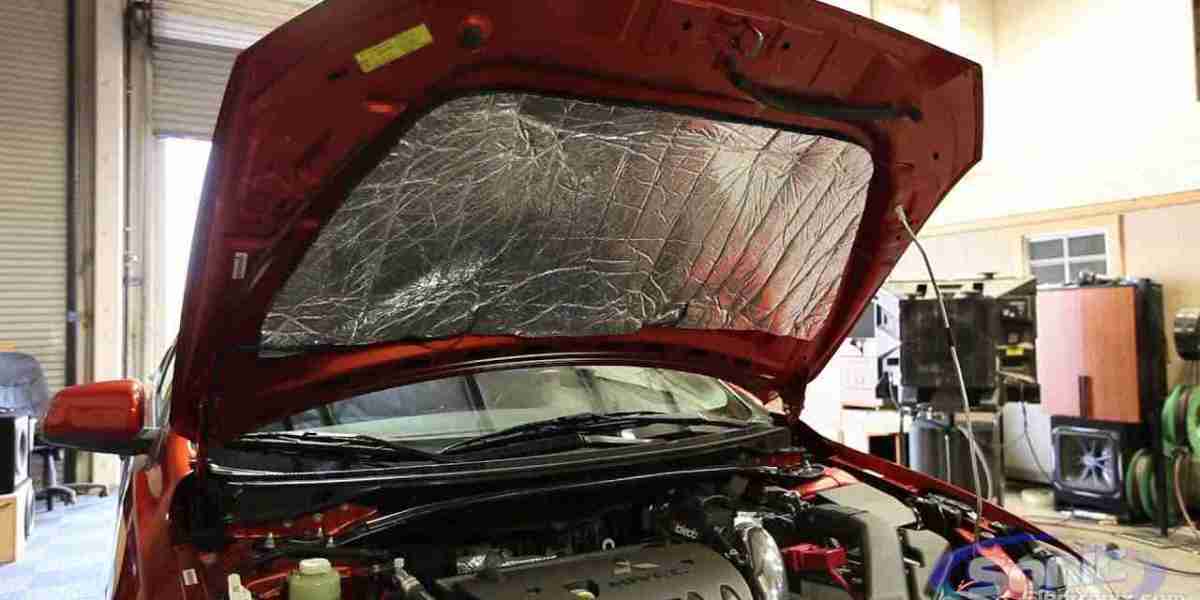
The sound you hear inside a vehicle does not always originate inside the passenger compartment. A considerable amount of mechanical noise begins underneath the hood and travels through the engine compartment, firewall, body panels, and surrounding structure before reaching the driver and passengers.
Engine operation naturally creates vibration, combustion noise, accessory noise, airflow, and mechanical movement. When those sounds encounter thin metal panels or poorly isolated surfaces, they can become more noticeable inside the cabin. Heat creates another challenge because the engine compartment operates at temperatures far above the surrounding atmosphere.
This makes the area under the hood an important consideration for anyone trying to improve overall vehicle comfort. Properly planned engine bay treatment can help manage unwanted mechanical sound while also addressing heat transfer around the firewall and surrounding components.
For enthusiasts building an upgraded audio system, restoring an older vehicle, improving a daily driver, or refining a performance car, the engine compartment should not be overlooked when developing a complete noise-control strategy.
What Makes an Engine So Noisy?
An internal combustion engine is a complex collection of moving and combustion-driven components. Every time the engine operates, pistons move rapidly, valves open and close, the crankshaft rotates, accessories turn, and combustion creates pressure inside the cylinders.
Some of that energy becomes sound. Some becomes vibration. The vehicle's body structure then provides multiple pathways for that energy to travel.
The engine itself is not the only source. Alternators, belt-driven accessories, cooling fans, pumps, pulleys, turbochargers, exhaust components, and intake systems can all contribute to the overall sound profile.
At idle, mechanical ticking, vibration, and accessory noise may be more noticeable. Under acceleration, combustion and exhaust sounds can become much stronger. At higher engine speeds, the frequency and intensity of mechanical activity increase as well.
A well-designed insulation strategy starts by recognizing that there is rarely one single noise source responsible for everything the driver hears.
Why Engine Noise Enters the Cabin
The firewall is one of the most important structures in this discussion. It separates the engine compartment from the passenger compartment, but it cannot completely isolate the two environments.
The firewall must accommodate wiring, hoses, steering components, HVAC connections, pedals, ducts, and other vehicle systems. These openings and interfaces can create pathways through which sound and heat can travel.
The metal itself can also vibrate. When mechanical energy from the engine reaches the body structure, the firewall may transmit or radiate some of that energy into the cabin.
This is where thoughtful insulation becomes useful. Instead of simply trying to make the engine quieter, the goal is to reduce the amount of unwanted energy that reaches the occupants.
Treating the appropriate surrounding surfaces can help break up these transmission paths and create a more controlled acoustic environment.
How Engine Bay Sound Deadening Works
The concept behind automotive sound treatment is relatively straightforward: control vibration at the source or along the path it uses to reach the cabin.
Metal panels can resonate when exposed to mechanical energy. A suitable damping material can reduce that resonance by changing the panel's response to vibration.
This is one reason engine bay sound deadening can be valuable as part of a broader vehicle treatment plan. Rather than relying entirely on interior carpeting or cabin-side insulation, it addresses the environment closer to the source.
However, engine compartments are different from ordinary cabin areas. Temperatures can be substantially higher, exposure to fluids can be greater, and clearance around moving or hot components can be limited.
Material selection must therefore be based on the specific application rather than simply choosing the thickest or heaviest product available.
Sound Control and Heat Management Work Together
Noise is only half of the under-hood problem.
The engine compartment generates significant heat, particularly around the exhaust manifold, turbocharger, downpipe, catalytic converter, and other high-temperature components. That heat can radiate toward nearby surfaces and conduct through metal structures.
Once heat reaches the firewall, it can transfer toward the passenger compartment. During hot weather, this can make the interior harder to cool and can create noticeable warmth around the dashboard, footwell, or firewall area.
A thermal insulation strategy can help reduce that transfer when the appropriate material is used in the correct location.
Acoustic and thermal treatment should still be viewed as separate functions. A product designed primarily for sound control should not automatically be treated as a high-temperature barrier, and a thermal barrier should not be expected to solve every acoustic problem.
Combining suitable materials based on their intended purpose produces a more dependable result.
The Firewall Deserves Special Attention
If the goal is to reduce engine-related cabin noise, the firewall is often one of the first areas worth evaluating.
It sits directly between the engine compartment and the occupants. Any vibration or sound that crosses this boundary has a direct path toward the interior.
Firewall treatment can involve addressing accessible metal surfaces while preserving factory components and service openings. The exact approach depends heavily on the vehicle's construction.
Some vehicles provide relatively easy access from the cabin side, while others may offer more practical access from the engine compartment. In either situation, installation should respect factory equipment and manufacturer specifications.
The firewall should never be treated in a way that obstructs pedals, steering components, wiring, HVAC systems, drainage, or other safety-critical systems.
A carefully planned installation can provide meaningful acoustic and thermal benefits without compromising vehicle functionality.
Under-Hood Insulation Can Also Change the Acoustic Character
The underside of the hood is another surface worth considering.
Large hood panels can reflect and radiate engine noise. Because the hood sits directly above the engine, it can become part of the acoustic environment under the hood.
A suitable hood liner or purpose-designed insulation material can help manage reflected sound while also providing thermal protection when the product is rated for the application.
The objective is not necessarily to eliminate engine sound. Some drivers enjoy hearing the character of a performance engine, especially during acceleration.
Instead, the goal is to reduce harshness and unwanted mechanical frequencies while maintaining the vehicle's desirable sound.
This distinction is particularly important for enthusiasts who want a refined cabin without making the vehicle feel disconnected from the powertrain.
Reducing Heat Around the Firewall
Heat management becomes especially important when the engine compartment contains high-temperature components close to the firewall.
Turbocharged engines can create substantial heat because the turbocharger and associated exhaust components operate at elevated temperatures. Performance exhaust systems can also increase thermal exposure around nearby surfaces.
The firewall can absorb and conduct some of that heat toward the cabin.
A properly selected thermal barrier can help interrupt this pathway. Reflective materials can be useful in applications where radiant heat is a major concern, while insulating materials can help reduce conductive heat transfer.
The exact solution depends on the heat source, distance, airflow, material temperature rating, and available installation space.
For extreme-temperature areas, always use a product specifically designed and rated for the conditions involved.
Choosing the Right Material for an Engine Compartment
Engine compartments are demanding environments. A material that works perfectly under a carpet may not be appropriate near an engine or exhaust system.
Temperature resistance should be one of the first considerations. The closer the material sits to a heat source, the more important its temperature rating becomes.
Durability also matters. Under-hood areas can experience vibration, moisture, dust, fluids, and repeated temperature cycles.
The material should also remain secure during operation. Anything that can loosen and contact belts, pulleys, fans, steering components, exhaust parts, or other moving or hot components can create a serious problem.
Thickness should be considered alongside clearance. A thicker material is not automatically better if it prevents a factory component from fitting correctly.
The best material is the one that meets the acoustic or thermal requirement while remaining appropriate for the physical conditions of the installation.
Do Not Confuse Engine Insulation With Engine Overheating Solutions
A common misconception is that adding insulation around an engine compartment automatically improves engine temperature management.
The primary purpose of acoustic and thermal insulation is to control heat transfer and protect or isolate surrounding areas. It should never be used as a substitute for a properly functioning cooling system.
The radiator, cooling fans, coolant system, thermostat, airflow paths, and other factory components still need to operate correctly.
Likewise, insulation should not block necessary ventilation or trap excessive heat where it could damage components.
The goal is controlled heat management, not simply surrounding the engine with insulation.
A good installation respects the vehicle's original cooling strategy while reducing unwanted heat exposure in areas where occupants or sensitive components need protection.
Engine Bay Treatment Can Complement Interior Sound Deadening
Treating the engine compartment does not replace cabin insulation.
Instead, the two approaches can complement each other.
Interior treatment can address floor vibration, road noise, door resonance, roof noise, trunk noise, and other sources entering from outside the cabin. Under-hood treatment can focus more specifically on mechanical noise and heat originating around the engine.
When both areas are treated strategically, the overall result can be more balanced.
For example, a vehicle with heavily treated floors may still have noticeable engine noise entering through the firewall. Conversely, treating the firewall alone may leave significant tire and road noise coming through the floor.
A complete plan considers the major noise paths instead of relying on a single treatment area.
The Connection Between Engine Noise and Vehicle Audio
A quieter cabin can make an aftermarket audio system feel more capable without changing the amplifier or speakers.
Engine noise occupies part of the same listening environment as music. At highway speeds or during acceleration, mechanical sound can mask quieter details in a recording.
When background noise decreases, the listener can hear more of the audio system's output without continuously increasing volume.
This can be especially valuable for systems designed around detailed vocals, acoustic instruments, or low-level musical information.
For subwoofer systems, reducing structural vibration throughout the vehicle can also help prevent unwanted rattles. A powerful subwoofer produces significant low-frequency energy, and untreated panels can respond to that energy.
Sound treatment therefore serves two purposes: reducing external noise and creating a more controlled environment for the vehicle's own audio system.
Older Vehicles Can Benefit Significantly
Classic and older vehicles often have fewer factory insulation layers than newer models.
Their engine compartments may also transmit considerable mechanical noise through older firewall materials, worn seals, thin body panels, and aging mounts.
Restoration projects provide an excellent opportunity to address these issues while the vehicle is already disassembled.
Replacing deteriorated insulation and improving selected areas can make an older vehicle much more comfortable without changing its appearance or driving character.
This can be particularly useful for classic cars that are driven regularly rather than kept exclusively for display.
A carefully installed modern insulation system can bring a more refined cabin experience while preserving the vehicle's original identity.
Performance Vehicles Need a More Precise Approach
Performance vehicles introduce additional challenges.
Higher engine output can mean greater combustion noise, increased exhaust temperatures, forced-induction heat, and more vibration throughout the powertrain.
At the same time, performance enthusiasts may not want to eliminate every mechanical sound. Engine character can be an important part of the driving experience.
The solution is selective treatment.
Instead of attempting to silence the entire powertrain, an installer can focus on harsh frequencies, unwanted firewall transmission, excessive heat transfer, and resonance that makes the cabin tiring during normal driving.
This creates a more refined environment without removing the sounds that make the vehicle enjoyable.
Trucks and SUVs Have Different Noise Priorities
Large trucks and SUVs often have substantial cabin volume and extensive body panels, which can allow mechanical noise to become noticeable.
Engine sound may combine with tire noise, suspension movement, wind noise, and drivetrain vibration.
Treating the engine-side firewall can help address one part of that equation. Interior floor, door, rear-wall, and roof treatment can then handle other sources.
For work trucks that spend long hours on the road, reducing constant background noise can improve comfort during extended trips.
For custom trucks equipped with upgraded audio systems, under-hood and firewall treatment can also contribute to a more controlled listening environment.
Installation Planning Should Come Before Material Application
A successful project begins before the first piece of insulation is installed.
Inspect the engine compartment carefully. Identify the major heat sources, moving parts, service areas, wiring, hoses, fluid reservoirs, ventilation paths, and factory insulation.
Look for areas where noise or heat appears to have a direct route toward the cabin.
Measure available space before selecting material thickness. Check whether hood clearance, firewall access, brackets, fasteners, and other components will be affected.
Planning also makes it easier to determine which areas need acoustic damping, which need thermal protection, and which should remain completely unobstructed.
This approach prevents the common mistake of buying materials first and figuring out their application afterward.
Surface Preparation Matters
Adhesive-backed insulation requires a clean and suitable surface.
Oil, grease, dust, dirt, and residue can interfere with adhesion. Engine compartments naturally contain more contaminants than interior cabin areas, so cleaning deserves particular attention.
The surface should be prepared according to the material manufacturer's recommendations.
Once the material is installed, firm and consistent contact helps establish a reliable bond. Edges should be properly secured, and the material should conform to the intended surface without creating interference.
Avoid stretching materials beyond their intended characteristics or forcing them into locations where they cannot remain securely attached.
Good preparation can be just as important as product selection.
Keep Safety at the Center of the Installation
Anything installed around an engine must be treated as a safety-sensitive modification.
Do not allow insulation to contact exhaust components unless the material is specifically designed and rated for that application.
Keep materials away from belts, pulleys, cooling fans, throttle mechanisms, steering components, and other moving systems.
Do not block air passages or create interference with factory cooling equipment.
Avoid covering labels, inspection points, fluid reservoirs, wiring connectors, or components that require routine service.
When working around high-temperature areas, allow the engine to cool completely before beginning installation.
If the installation involves areas where clearance or temperature limits are uncertain, professional assessment is the safer choice.
Common Mistakes That Reduce Results
One of the most frequent mistakes is assuming that more material automatically means better performance.
Adding unnecessary layers can increase weight, consume valuable clearance, and complicate maintenance without delivering proportional benefits.
Another mistake is using an interior-only product in an under-hood environment. Automotive materials have specific operating limits, and engine compartments can exceed the conditions found inside the cabin.
Poor surface preparation is another common issue. Even an excellent adhesive system can struggle when applied over contamination.
Some installers also focus entirely on the hood while ignoring the firewall, which may be a more direct path for engine noise and heat into the cabin.
A successful project focuses on the complete transmission path rather than treating whichever surface is easiest to reach.
How to Evaluate the Results
Before beginning the project, pay attention to the vehicle's existing noise characteristics.
Listen at idle, during moderate acceleration, under heavy acceleration, and at cruising speed. Notice whether the dominant sound comes from the front of the vehicle, firewall, floor, exhaust, tires, or somewhere else.
After installation, repeat the same observations under similar conditions.
The most useful improvement may not be a dramatic disappearance of engine sound. It may be a reduction in harshness, vibration, resonance, or heat reaching the occupants.
For audio enthusiasts, compare the same music at the same volume before and after treatment. Notice whether vocals, bass, and quieter details are easier to hear.
This provides a more meaningful evaluation than simply judging the installation by appearance.
A More Comfortable Engine-to-Cabin Relationship
A vehicle does not have to be completely silent to feel refined.
The objective is to create balance.
Drivers should still be able to understand what the engine is doing, hear important vehicle sounds, and enjoy the character of the powertrain. At the same time, excessive vibration, harsh mechanical noise, and unwanted heat should not dominate the cabin.
Well-planned engine bay sound deadening can contribute to that balance by controlling the pathways through which mechanical energy reaches the passenger compartment.
When combined with firewall treatment, floor insulation, door damping, and appropriate thermal barriers, it becomes part of a complete vehicle comfort strategy.
When Engine Bay Insulation Makes the Most Sense
There is no single vehicle type that needs this treatment. Its value depends on the vehicle's existing noise level, heat exposure, intended use, and owner's expectations.
It can be especially useful for older vehicles, performance cars, trucks, SUVs, custom builds, daily drivers, and vehicles with upgraded audio systems.
It also makes sense when an interior is already being removed for restoration or sound-deadening work. Completing related treatment during the same project can reduce repeated disassembly.
For vehicles that spend significant time in hot climates, thermal management can provide another reason to examine the firewall and under-hood environment.
Final Perspective
The engine compartment plays a much larger role in cabin comfort than many vehicle owners realize. Mechanical vibration, combustion noise, accessory sounds, and heat all originate or accumulate in this area before finding pathways toward the passenger compartment.
Effective insulation begins with understanding those pathways.
The right combination of damping, acoustic treatment, and temperature-resistant insulation can reduce unwanted mechanical noise and help limit heat transfer without interfering with the vehicle's essential systems.
The key is to select materials for their intended application, respect temperature and clearance requirements, prepare surfaces properly, and install everything with safety in mind.
For anyone pursuing a quieter cabin, improved audio clarity, or better thermal comfort, engine bay sound deadening can be a valuable part of a broader automotive insulation strategy. When planned correctly, the result is a vehicle that feels calmer at idle, more controlled during acceleration, and more comfortable throughout everyday driving.